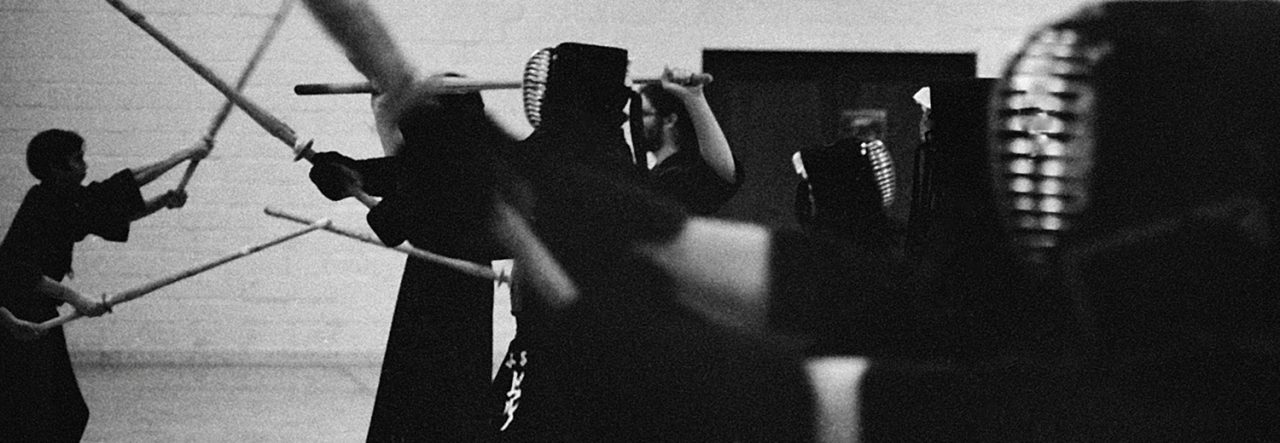
Yondan, it’s a PASS!

The jury was lead by Hirakawa Sensei and 5 Belgian K7 teachers and I’ve had the pleasure of receiving nice comments from some of them after the shinsa completed. Other people who saw the exam from the sidelines gave me similar praise, and I’m clearly not used to it.

tumblr_1b54801d92e598c4ce69d922f9391bfa_21d750dc_540.jpg

During the shinsa, I focused mostly on my composure and the way I entered into a fight. Though I did falter here and there (I tripped slightly at one point because of my ankle) but it didn’t seem to be important in the grand scheme of things although at the time I took those little missteps as potentially damaging (I guess going back right at it as if nothing happened did the job).

As far as the fights went : I came in strong with loud kakegoe in to-maai then carefully approached into kamae / issoku-itto-no-maai. When I felt I was at the right distance, I did a big, strong, seme thrust lead by the hips and left hand. As soon as I saw my shinsa partners react, I would go for a debana waza, either degote or debanamen depending on the type of reaction, their speed, their height.

I did nothing more than pressuring strongly and going for men or kote as soon as aite reacted to my seme. No ideas of oji waza or nidan waza came into my mind, as what mattered most to me was to never be put in a position where I didn’t get to decide what was about to go down. I was bent on another idea : “create one opportunity, seize it, rinse and repeat.”

I did vary my seme method in the 2nd match as aite was getting used to my strong straight forward seme, I went for a lower seme to the crotch area, and instead of being strong, I’d move the tip of my shinai fluidly right or left to leave him guessing whether it would be kote or men. As soon as I felt hesitation in his stance, I attacked.

After a couple of those “baiting” debana, the final “yame” was called. After a few minutes of managing the tension by watching the 5th dan go at it, the numbers allowed for kata were displayed. I was relieved I made it, though kept myself focused for the kata part. I felt like I could have done that part better, but I suppose it was decent enough. Performing a “living kata” is a concept that is starting to sink in but the road to making it feel natural is long…

As far as keiko is concerned, the use of seme will be the theme for the next few years. I need to learn to make aite do what I want them to do, mainly by working on hikidasu (pulling them in) so I can seize opportunities of attack that I create myself. I’ve got a foot in that world but it’s still all pretty unrefined.

I plan to work on all types of seme, not only with the shinai but with posture and spirit too. That’s what I believe lies ahead on the journey to prepare for a 5th dan exam in four years : studying those principles and mechanisms to make them second nature, just as ki-ken-tai ichi has become natural through my journey up the lower dan-ranks.

Anyway, for my dojo it is also a massive boost and help. I now hold a rank at which being dojo leader won’t be frowned upon (as much). This is some hard-earned legitimacy right there. I have now also the added benefit of being able to solely focus on the progress on my dojo mates, as I don’t have to worry about my own evolution — at least not in the immediate future — and that’s an immense weight taken off my shoulders!

Last but not least : my wife’s due date is in December, right when the next shinsa opportunity would have been. I’m relieved I’ll be able to welcome our daughter into this world without having to think about my kendo evolution.

All’s good right now.

I want to practice. My senses are still sharp and in high alert from the whole seminar+exam process. We start the season this Thursday. Can’t wait even though I know it won’t be enough, I’ll have to go visit other dojos soon.

Anyway, may September be good to you folks!

Fall seven times…

Last Wednesday was the first day of the Summer Seminar lead by Nobuo Hirakawa(8K) with the presence of Otsubo(7K) sensei and Kashiwagi(7K) sensei, as well as a some of the (many!) Belgian 7K teachers.

The first 30 minutes were a nightmare for me, not because of the content of the drills, but I believe entirely because of the anxiety of the exam that’s going to take place on Sunday :

I was tense, I wasn’t in the groove, in my usual mood with my own body. Three different 7K senseis stopped multiple times to show me some basic stuff for my level (such as kamae, hikitsuke, striking). One of them stopped three times by me and it made me feel really embarrassed that I couldn’t easily apply what he said. Stress makes me lose all my composure, it’s horrible.

The sensei I consider to be my teacher, the 7K with whom I “click” most, didn’t come though I could see through the mengane that he had that “what the hell are you doing?” expression locked on his face.

Each time Hirakawa sensei showed a new drill, I was trying to talk myself into calming down. Letting go. Finding my pace. Unfortunately, I think the partner I was with didn’t help much with that. It was an older man with not much stamina or mobility and a lot of my distance and timing expectations were absolutely off.

I started recovering when, after the man had to bail out because of his stamina issues and I found myself in a group of three with a high-kyu/low-dan younger student and a 5th dan. But even then I was still a hot mess for at least 20 minutes before being able to perform more suitably.

When jigeiko started, I felt better, and thankfully I met my sensei while rotating and he looked satisfied. By then, I felt like my normal-self was back in the pilot’s seat. I also encountered the 2016 EU champion (Kensaku Maemoto) during one of the rotations. Of all 5-6 jigeiko I had that night, the one against my teacher and Kensaku were the most fulfilling (alongside another against a first-dan (ish) lady against whom I was the one doing hikitate)

I think that it’s the vocabulary. The willingness to speak the same language, of exchanging something valuable and pleasant despite the obvious differences in proficiency.

Needless to say that without the jigeiko to restore some self-confidence, I would currently be in despair in the face of the task of taking the 4th dan exam. My teacher’s comment after training also helped.

“You’re doing what you should do, keep going” he said.

I replied that sometimes it doesn’t work at all and he answered : “Don’t mind if it works or not with everybody, keep doing what you should be doing, that’s the most important” (meaning : continue with the good posture, going in earnestly, pressuring, reacting, trying to create a dialog)

I still will attend one more day of seminar before the grading attempt, and hopefully this training session will be less rocky.

It sure makes me think a lot about the road, the process.

One thing seems obvious, if I do pass, I won’t feel like I’ve really attained the rank after some time into it. I’ve had the same with the last grade I passed : it took me at least a year to develop the attitude you’d expect of a third dan.

Shisei wo tadasu — Correct your posture
Kokyu wo tadasu — Correct your breathing
Kokoro wo tadasu — Correct your heart.

(uttered by Hirakawa sensei at every post-training mokuso)

On the adventure of starting a dojo

A couple months ago, I went to a dojo that’s starting and the dojo leader is a person holding a very low-rank. He asked me “do I lead the training or do you?”. I said it’s his house, he does everything, I only came to train with them. Of course when he asked for my opinion I gave it, but I’m basically just there to sweat.

I feel for the guy because I’ve been there.

Being Shodan and being a dojo leader turns you into a nervous wreck at every visit from exterior people. It’s even worse when it’s a high ranking sensei who’s paying you a visit.

It takes some years to grow the balls to be able to act like you’re the master of your own dojo while having the wisdom to not overdo anything : you’re not a sensei, so you should be mindful of your ego and only act like a senior member of a group, and you should also pay attention not to lose yourself in useless or out of place rituals in an attempt to achieve ultimate orthodoxy. Also, concerning the opposite of that particular spectrum, you should strive not to be too lax either.

It’s quite an adventure to become dojo leader!

*raising glass to all who ever embarked on that particular journey*

Yondan attempt D-4

Yondan, so close, yet so far.

I know what is asked of me.
Can I make it happen is the question.

Question I will have to ask my two designated sparring partners.
With a kakegoe, with a seme, with a couple decisive strikes.

I might fail, maybe twice, maybe even more than that.
But I’ve got to keep asking the question.

“I’m here, what’ve you got?”

During the summer I only participated in a handful training sessions. One in a small, remote dojo where I went alongside the federation’s president, another time in a bigger dojo that had quite a few 7K senseis attending. And a last one in a medium sized dojo with a late-4th dan senpai leading the training. Three different moods but all brought a bit of light and confidence towards my 4th dan attempt that will take place at the end of this week.

But stress is definitely there even though it won’t be the end of the world if I fail. Weirdly enough, I’m not too concerned about the bouts (just a little) mainly because I feel like for third dan, I didn’t exactly know what to do beside of “look strong and determined and hit well”. This time around I’m imagining myself creeping into the distance, applying pressure, reacting. Those concepts are not vague anymore. Still difficult to pull off at times, but the concept is grasped.

No, what I find myself wanting to nail is the Reigi, having an outward appearance and behaviour that will already make a good impression. Wearing the keikogi neatly, going into sonkyo strongly, setting the tone for the encounter right as I enter the shiaijo. Convincing the crowd, aite, and myself, if you will.

I know I can pressure, I know I can launch successful debana waza, even if I feel like I haven’t got the broadest vocabulary out there, I still can rely a lot on basics that I get right, but yeah, I need to show that I mean business and that I’m not going to mindlessly throw attacks.

I know that’s exactly where I’m at in my kendo but it might take a few times to convince a panel, and statistically, with a pass-rate just below 50%, that’s a pretty valid feeling.

As the shinsa gets closer, talking, writing or thinking too hard about it makes my innards start to rumble. The anxiety is real. But as Sensei says : “When there’s a shinsa opportunity, you go, whatever the outcome may be. It’s part of the process”.

Anyway, before the attempt, I’ll attend two nights of the All Belgian Kendo Federation Summer Seminar lead by Hirakawa Nobuo who’s always accompanied by a host of Japanese senseis. I hope I’ll get from it what I need to keep my cool through the shinsa on sunday, though the die has been cast a long time ago and it’s too late to do anything about it now…

So, let’s go!

10 years of shiai.

My approach to shiai has been a very unrewarding one (but I wouldn’t trade it).

Belgium having a pretty decent level internationally and the community (and country) being small, a “hobby-kendo” guy like myself always ends up being the cannon-fodder of the bigger fish.

But I saw it as an opportunity to stand straight rather than electing to engage into “touch-kendo” as Hirikawa-sensei would call it. Rather than doing head dodges, I elected to try to take it (the hits, aite’s ippons) and use it as motivation to come up with a proper kendo response.

Better losing while doing tadashii-kendo than winning with moves that will ultimately make my progress in kendo stagnate further down the road.

It took me a decade, but now I’m starting to feel less of a headless chicken in shiai. Poise. Presence. Menace. If you’re not intimidated by any of mine and can read through my intentions, then you deserve to win and I’ll take it gracefully, and I’ll most probably still manage to learn something from it too!

Attendance at lowest, but motivation holding.

Despite us being usually between 2 and 4 (at best) per training session, morale is holding. The training sessions have become less formal as a result though : we come in, decide on which aspect we want to work individually and as a group, I propose a menu on which we agree and then we simply get to it.

There were a few times when we were just two in the dojo. This is when we’d go for a little more experimentation. I remember us doing a count-down kihon-men drill (10 strikes each, then 9 strikes each, then 8, etc.. all the way down to 1) we did this drill a few times in a row, it kept us occupied almost 40 minutes. We were focusing on relaxing, cutting correctly and also we were trying to get in a certain mental place.

Anyway, I’d like next season to bring in more people of course, as it creates the necessary group dynamics but I’m surprised at how motivated we manage to remain despite our very small numbers.


More Jigeiko thoughts

Sometimes weird things happen in jigeiko. Beside all the machiken (people waiting for you to launch something in the hopes of doing ojiwaza but who are not pressuring nor have the intention of instigating anything) and the ones that are simply doing their jigeiko in a vacuum (people who are just gonna attack instead of trying to practice with someone and react/adapt to them).

But then there is this weird breed of practitioners who completely misjudge your skill level (and probably their own), because you are not practicing in a way they find impressive, I guess, while to you it is clear they are at best a few years behind. But then somehow, their ego allows them to comment what you do mid-jigeiko and open targets and give you compliments.

That one guy I remember from a seminar a few months back must’ve been thinking something like “you don’t cut small and nervous, you must be a kyu. Now is my chance to give you some 2nd dan coaching. Here. During this seminar. Full of nanadan japanese sensei and two hachidan sensei.”

My eyebrows just raise while I realise that this is happening and I just roll with it but… No my dude, I’m working on my kihon and want to hit you with big techniques before you land your attack and see if I can “punish” you with tadashii form for going into that bullshit sanpo-mamori. I mean we are at a seminar and the whole session has been about practicing correct kendo. Lighten up.

But I also had very pleasant jigeiko during that event.

The pleasant encounters are the ones where I try stuff and end up not being able to do anything because a proactive 5th/6th dan is baiting me and I still take it even though I realise traps are being set up for me.

Another type of pleasant jigeiko is simply when I feel both of us earnestly tried to work with each other and when we both manage to land good techniques that had an interesting build-up.

This being said, I want to go back to rambling a bit : I don’t know if it’s the late-third dan vibe but I’m like shaking my head a lot more at some of what I see during jigeiko in general.

I recognise that some of the elements I frown at are more or less just a question of style, but mostly I believe I’ve been through a shift and it happened recently : it seems I don’t allow myself to be impressed by much, least of all the (more or less veiled) cocky attitude of others.

I’d rather see correct but slow or less “impressive” techniques done whole-heartedly than lightning-fast executions wrapped in badly veiled disdain or self-importance.

Head-dodge? I frown. “How’s that gonna help you in the long run?”
Smirk on their face because they’re dominating? I raise an eyebrow : “knock yourself out, you obviously need the stroke to the ego”.
Sampo-mamori? : “tsk tsk tsk”

I don’t know man, I’m just rambling but yeah, I can’t be fazed as easily as before. Maybe because I’m holding the practitioners I encounter to the same standards I’m being held to?

Contrary to most cocky practitioners, I don’t care if the person I’m practicing with is good/fast/powerful or not, all I care is that they are earnest and carry themselves with a nobility of sorts.

I feel some people really have a long way to go in that regard.

Reflecting on jigeiko

During the jigeiko sessions I’ve done lately I went against two different breeds of 5th dan (just a reminder, I’m third-year 3rd dan) : There’s the “hikitate but still going in earnest so you don’t feel like you are being offered anything” type and the “no jigeiko, I’ll destroy you like this is shiai” type.

I’ve reached a point in my kendo where I don’t mind the latter, though I still consider it rude. I clearly very much prefer the former. Feeling that both participants has had a chance to take part to a conversation in a satisfactory manner is what jigeiko should be.

Last time sensei visited us, he said right before jigeiko, referring to people who block and dodge and are more concerned about not getting hit than actually training :

“Jigeiko is like playing chess, but sometimes you play chess against a pigeon : they knock over the pieces and shit all over the board… don’t be a pigeon”

He added :

“Yes, they might score a lot and they might think they’re good at kendo but they’re wrong. Even a broken watch is certain to be right twice a day.”


One sensei, or three — or why I don’t feel guilty about shuffling.

I’m in a particularly weird situation : no sensei present at my dojo, but I am dojo leader. Though there is one 50km away that I consider my sensei, that I don’t see often but whose advice I follow eagerly.

Plus two other, same 7th dan rank, same generation sensei who have different teaching styles and will bring perspective on my auto-evaluation, as other input sources.

The catch : all three of them have the same Japanese hachi-dan sensei and are good friends, so basically, I consider this maximising my angles of approach of the same core principles. Obviously they are different from each other as human beings but the source material (their sensei) makes sure I’m basically learning the same kendo.

Sometimes, I may feel that one sensei is going to be best for putting me on the right track, depending on the difficulties I face while if I limited myself to just one, I might find myself going in circles more.

I know my place well and embrace it. I’m a dojo leader but not a sensei. I’m willing to learn to be able to pull my group in the right direction, not to make myself important. and I shuffle between those three sensei that I appreciate greatly, not because I don’t like when I hear their criticism (and sometimes admonishing) but because I want a bigger and clearer, more diverse picture of where I stand in kendo.

I really think that both this and having been a dojo leader for so long (since my first dan) wouldn’t have been possible without a solid decade of beforehand martial arts training, through which my ego has been somewhat tamed.

Without a mind already moulded by practice, I would probably have lost myself on an ego trip, I’m pretty sure of that.

So with this post, and against all your expectations, dear reader, I would like to thank my fencing Maître d’Armes and my Karate Sensei for dealing with, respectively, the impatient adolescent and later the superficial young man that I once was.

They helped me root out all sorts of flaws of character and I am truly, humbly grateful for it. The sad thing is that I lost contact with both of them. I tried to send a letter to my karate sensei around 2011 but it came back “unknown at this address”.

I fear the worst.

I think my Maître d’Armes is still around though, but he’d be well into his nineties by now.

I fear the worst.

I should try and get in touch.


Wow, this post has a twist that I didn’t anticipate when I started writing it…

tumblr_inline_phht60S37k1vew5ck_1280

Left : me aged 13. I practiced fencing from 1997 to 2001, from 12 to 16. Right : Maître d’Armes Fernand Briot after his last training, we did a honour guard to celebrate.


tumblr_inline_phht60QOuA1vew5ck_1280

Left : the karate dojo before practice. Right : my Karate Shotokan instructor from 2001 to 2006, Alex Guiot-sensei who liked to incorporate jiujitsu and aikido techniques around a strong shotokan core. I practiced another year and a half in a couple other dojos after his closed down. I never could find elsewhere what I liked at the zanshin no michi dojo.

In 2005 I practiced kendo and iaido for a year in another town 40 kilometres away and had to stop because I was a student and moving around proved impractical. When my current dojo opened in my home town at the end of 2009, I joined immediately!

We have started the tenth year of existence of this kendo dojo and I have now begun my 11th year of kendo. I hope there are plenty more years that will follow and plenty more sensei to guide me along the way, and perhaps not only in matters pertaining to kendo, but also about life in general.

*raises  glass*
Here is to all the giants whose shoulders we’ve been invited to stand upon.

A few weeks back, I sent Andy Fisher a few questions for his Kendo Rant bit on his Facebook and youtube channels. I expected the answers I got although it drew my attention on a number of things I hadn’t considered long enough, somewhat mitigating my views.

I still feel like I need time to consider all the points of the arguments I made. What my position was before I started asking around, take into account the process I’ve been through and where my opinion is at now.

But before I write articles about some of these issues, I’d like to start structuring those ideas, maybe simply with a small list to which you may react and give your two cents, as I am still letting my ideas mature before I write a proper article about those subjects.

About Shiai :

  • Kendo and competition go hand in hand, the match is the test of skill
  • But the only ones really doing competition in Japan are kids, students and professional players. Most of them don’t start willingly. They don’t have a choice in the matter. While “hobby” kendoists starting at say 25-30 years of age, follow a different path and are not really pushed to participate.
  • Participating only sporadically to such events seems to me, to be more in line with the self-development aspect of kendo.
  • Some people say it’s vital to participate but some discourage it (to each their own then?)
  • Outside Japan (with maybe the exception of Korea) isn’t this “you must participate” argument coming from the higher ranks more about making the small regional/national federations thrive and that might actually be the more important reason for participating to the taikai? In which case, should it not be presented that way, outright?
  • Could there be other events in which shiaigeiko is performed, without the daunting aspect of driving far to only participate in a couple of matches, which is an aspect of shiai that is hardest on hobby-kendoists?
  • Andy’s “it is what it is, you gotta stick with it” answer feels somehow unsatisfactory but, coming from a national team captain, it was expected. But then this might simply mean that I’m free to make my own choice on the matter and I shouldn’t be afraid of anyone’s opinion.

About violent behaviour in Kendo :

  • Andy’s answer is clear and I am 100% behind it : anyone who does kendo to rough up others to make themselves feel better / more powerful is doing it wrong.
  • Apparently Andy’s never witnessed any case of abuse of power in his kendo practice and that is encouraging because that means I might have had just a lot of bad luck and then it helps me paint another picture of the practice. But looking around me and seeing some people who love to affirm themselves through the roughing of others and some holding lists of who they manage to throw on the ground during shiai, as a sort of “fun” trophy… well… ouch.
  • What I was alluding to in my question was such cases as the dangerous over-the-shoulder judo technique that happened a few years back in an international level championship. Andy didn’t really understand it that way and I guess I wasn’t clear enough. But here, I’ll address the elephant in the room : why aren’t rules changed so that such behaviour is met with instant DQ from the event plus recommendation from FIK or EKF to the person’s national federation for a permanent ban or membership suspension?
  • Why does it look like the various federations don’t care about this at all? Some form of communication from the federations to the members at large would help loads to clarify at least their position on the matter (for instance a couple of lines in the shiai description documents).
  • Their silence seems like tacit approval and I think, as a federation, you don’t want that.
  • The problem is that if I do kendo, I will expect for a certain number of things to happen as part of the practice but I will also never expect to suffer dangerous moves (that could end up in injuries or fatalities) because they are not part of the conventional practice.
  • Illegal move + putting your opponent’s safety at risk : doesn’t it warrant a very firm reaction from the shinpan and event organiser than just a hansoku and maybe a little informal talk on the sidelines?