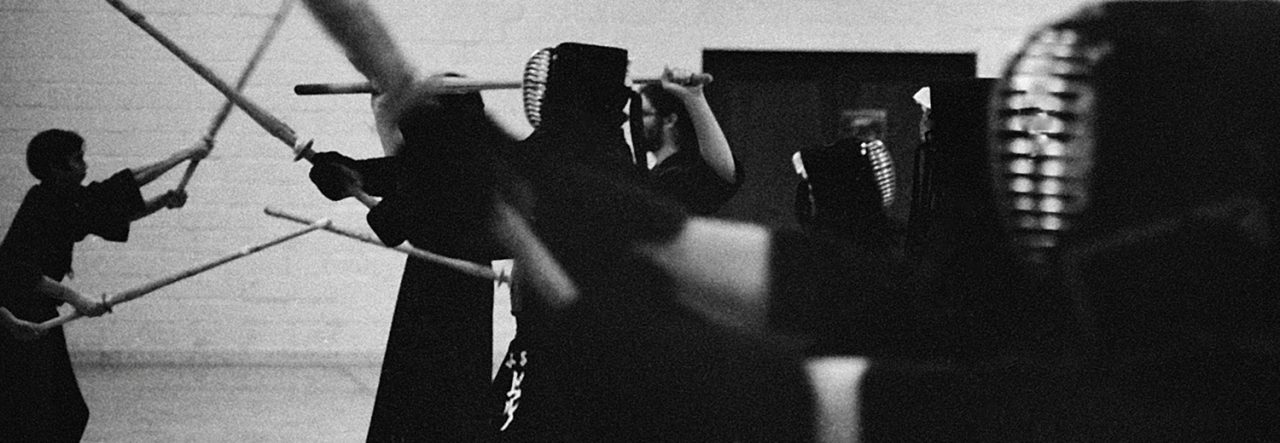
This week, there weren’t any kyusha at practice, so I’ve centered the session around how to deal with blockers, somewhat inspired by Andy Fisher’s video, but with the objective of having them be more conscious about what they do with their kamae and realise that when a partner does something else than holding the centre, there are opportunities to go and seize.
- I started with simply seme men, hint to the use of their footwork and hips to execute seme rather than their arms.
- Then I moved on to small seme-men but with a bit of searching for an opening or a more realistic approach. Seme could be omote as well as ura (introducing a choice).
- The next move was to give instructions to motodachi : “Either have strong kamae or weak kamae, don’t change your mind while kakarite do their techniques”. From there on, kakarite would have to sense the nature of motodachi’s kamae while doing seme, forcing them to make a choice, not according to their preference, but a choice motivated by an observation. “kamae is strong, I’ll go kote or kote-men or men from ura side” or “kamae is weak? MEN!”
- From there I introduced the blocking movement from motodachi (raising shinai slightly like kaeshi-waza, without moving, simply blocking) the kakarite would make the same choice : the way to omote men is closed, immediately pick something else.
The goal was to start training their minds and bodies to react to unforseen openings without hesitation. To be able to make a decision at the last moment (but not making fake attacks). To not feel lost when others start blocking. To mind their own kamae and undesirable shinai movements made out of surprise or fear.
I concluded by showing the right way of controlling a sparring partner without being “a blocker” : I reminded them of the triangle made by feet, hara and kamae, that to thwart an attack and still have a correct kamae that would allow for counter attack or at least a dominant favorable position, you need to wedge that triangle into aite’s maai : controlling the partner’s shinai / defending yourself should be done by extending arms forward, moving forward, keeping your shinai pointed at his targets.
Even if my students haven’t made it obvious to their bodies what to do in such situations, that will come in time, if they work on those aspects.
The road is still long. I feel like I’ve just only properly started.


 Gentle Kendoist : A Diary