

Aside from kendoist, I’m also a photographer and video-maker.
I had a digital artist phase between the mid 2000s and early 2010s.
Kendo Yondan and dojo-leader since shodan : reflexions on this atypical journey
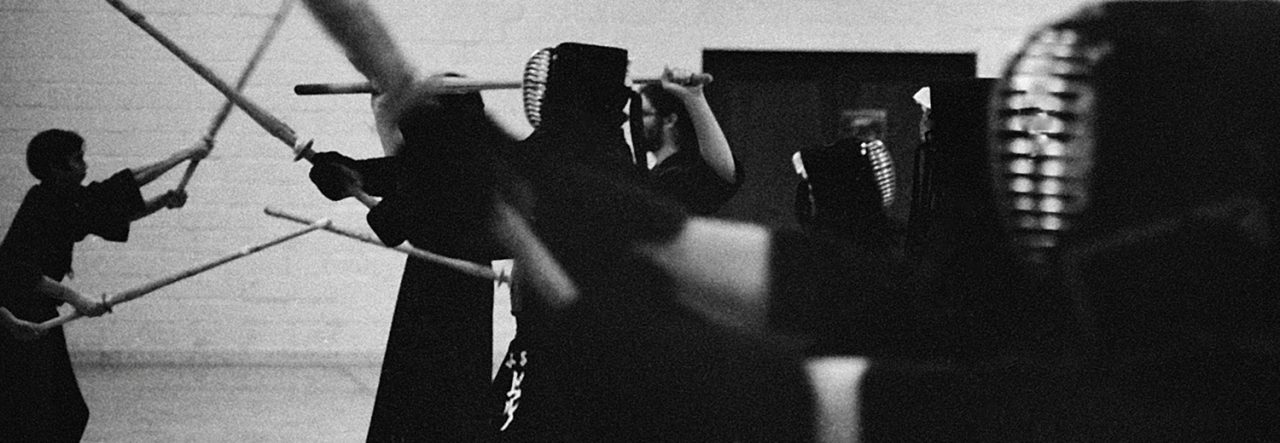
Aside from kendoist, I’m also a photographer and video-maker.
I had a digital artist phase between the mid 2000s and early 2010s.
On monday we’re going to be giving another (40 minutes away) dojo a little visit, for which one of their dojo’s “sponsor” 7th dan sensei will be coming down from the capital and I thoroughly enjoy that sensei’s teaching style.
Encouraging, always a good word, on point analysis and asks you to give the max and beyond. I’ll take some pictures 🙂
Warm days bring almost empty dojos. But we still worked hard.
3 present : two 1 dan practitioners and me.
Warmup : ±5′
Men Kirikaeshi (6-8 rotations)
Endurance training ±30′
On the length of the dojo, big techniques :
Oikomi geiko (only men throughout the dojo) 4 rotations of 2 dojo lengths each
Oikomi geiko (first strike kote, then men throughout) 4×2 dojo lengths
Oikomi geiko (first strike kote, then men with last strike dô) 4×2 dojo lengths
Oikomi geiko (kote men dô, kote men dô, kote men dô) 4×2 dojo lengths
Oikomi geiko (kote men dô men men, kote men dô men men) 4×2 dojo lengths
3 way infinite kihon men (issoku ittô no maai kara) with focus on left calf power, left ankle movement, buttox and abs contraction + arm relaxation, finger snap, correct men-landing and sound + strong kiai and zanshin acceleration.
Waza geiko : types of seme and harai techniques (omote and ura). 25-30′
Sliding towards throat (standard) and lower seme (with seme ashi or in one step strike) towards tsuba, small technique either left/ura (kote-men) or right/omote (men) depending on motodachi’s position.
Variations including reactions of motodachi (against hard kamae, weak kamae)
Jigeiko to test it out.
Question from practitioners : how to deal with kyusha kendoists who often don’t allow for the “kamae-dialog” construction by attacking inappropriately and/or constantly.
My answer : destroy their kamae, then hit big techniques, pressure them into making mistakes (opening men or kote). Hari techniques, small wrist pressuring osae movement forcing an improper-going-too-far “return to kamae” movement from opponent, thus opening their kote, etc
In other words : have a more dominant kendo, while working big and correct (the level difference should allow for a display of tadashii).
Jigeiko all together for the last 20 minutes of practice.
Video I made back in 2015 as a little summary of our presence at the national kyu taikai.
Nuke-tô, the act of drawing your sword, or in this case, shinai is a subject I would like to reflect on, and for which I would ask your opinion about as well.
I’ve been taught two conflicting ways of doing nuke-tô :
I’ve been told by some people (but not my sensei) that the first option it is seen as rude and too agressive, while my sensei, for my 3rd dan grading encouraged me to do it. “Show you’re here to do kendo, from the first step you take”.
I believe it is one of these questions that have different answers depending on how you envision kendo.
Since I’ve been 3rd dan I’ve completely changed my way of performing the salute, without guilt. I believe that when I get into sonkyo now, I’m non-verbally saying something like “I’m here, I’m eager, let’s practice together”.
What are your thoughts on this?
I’m in that area where I start understanding the effect of pressure on others and where I start seeing opportunities more clearly, especially, the moments I should move and the moments I shouldn’t.
I’m starting to understand that always attacking like we’re taught in the first few years is not enough and that I’ll need to start being aware and take a better advantage of the action/reaction dynamics involved without sliding into defensive behaviour.
I’ll postulate that my next grading step next year — 4th dan — is about making this as natural as possible :
Pressure : kiai, kizeme, seme, reaction of partner, my reaction to their reaction, seizing the opportunity, putting them into one of the Shikai (aka four sicknesses of the mind) and being able to make my kendo shine through an overall attitude of “tadashii kendo” from the first ritsu rei (standing bow) to the last.
I’ve missed the championship following a nasty cut in the hand.
I can’t train for two weeks, but I’m still leading the training sessions (and throw one-handed strikes here and there). Since I’m incapacitated, I can focus more on correcting our members. So all in all, it’s not that bad.
There is a regional taikai in a month, hopefully my hand will be fully operational by that time.
 Gentle Kendoist : A Diary